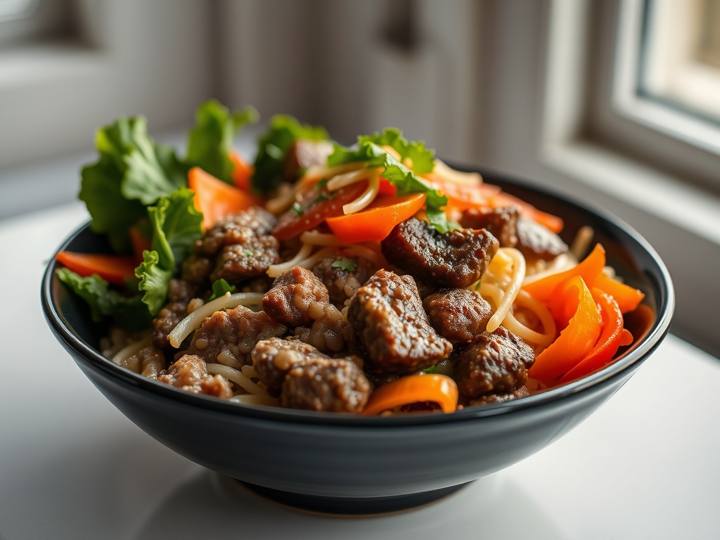
Bibimbap with Beef and Vegetables
A vibrant Korean rice bowl, bursting with fresh flavors and textures.
⏱️ 55 min🍽️ Serves 1
🔥 650 kcal💪 35g protein🍚 70g carbs🥑 25g fat🌾 7g fibreper serving
📲 Share
servings
Ingredients
- 🥩200 g beef sirloin, thinly sliced
- 🥚2 eggs
- 🥬200 g spinach
- 🍄100 g shiitake mushrooms, sliced
- 🥕1 carrot, julienned
- 🥒½ cucumber, julienned
- 🍚2 cups cooked short-grain rice
- 🌶️2 tbsp gochujang (Korean chili paste)
- 🍶1 tbsp soy sauce
- sesame oil1 tbsp sesame oil
- 🧄1 tsp minced garlic
- 🍚1 tsp sugar
- 🍚 sesame seeds, for garnish
Pro tips
- For extra flavor, lightly season each vegetable individually with a pinch of salt and a drop of sesame oil after cooking.
- Warm your serving bowls slightly before adding rice to keep the dish warmer longer.
- Feel free to customize with other vegetables like bean sprouts, zucchini, or bell peppers.
Method
- 1Marinate the beef: In a bowl, combine beef with 1 tsp soy sauce, 1/2 tsp sesame oil, 1/2 tsp minced garlic, and 1/2 tsp sugar. Mix well and set aside for 15 minutes.
- 2Prepare vegetables: Blanch spinach, then squeeze out excess water. Sauté mushrooms, carrots, and cucumber separately in a pan with a touch of oil until tender-crisp.
- 3Cook the beef: In the same pan, cook the marinated beef until browned and cooked through. Set aside.
- 4Fry the eggs: Fry two sunny-side-up eggs, ensuring the yolks are still a bit runny.
- 5Assemble the bowls: Divide cooked rice into two large bowls. Artfully arrange the cooked beef, sautéed vegetables (spinach, mushrooms, carrots, cucumber), and one fried egg on top of each rice portion.
- 6Prepare the sauce: In a small bowl, mix gochujang with remaining soy sauce, sesame oil, garlic, and sugar. Add a tablespoon or two of water to thin if desired.
- 7Serve: Drizzle the gochujang sauce over the bibimbap. Garnish with sesame seeds and serve immediately.